Surface design
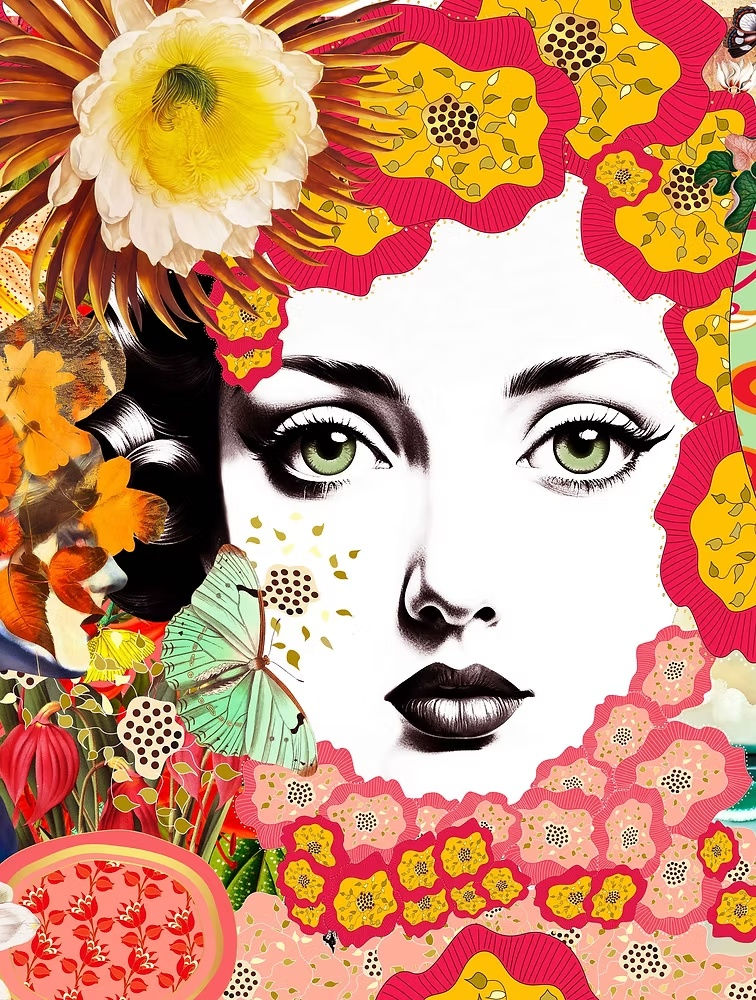
Surface design is an interdisciplinary design practice that focuses on developing patterns, illustrations, and visual expressions for application on physical and digital surfaces. The purpose is to give everyday products a distinct aesthetic touch, while at the same time adapting the design to the product's function, material, and production method.
The field encompasses a wide range of applications, from apparel and textile printing, wallpaper and interior fabrics to ceramics, mugs, phone cases and home decor such as cushions and bedding. The work combines creative and technical skills, using methods such as digital illustration, hand drawing, painting, printmaking techniques and the development of repetitive patterns.
The result is well-thought-out design solutions that can be scaled, adapted and applied across products and surfaces, with high visual quality and commercial relevance.
Placement print
What does placement print mean? Placement print is a design technique in which an illustration is precisely placed on a defined area of a product, rather than being repeated as a pattern across the entire surface.
The illustration is designed to the correct scale in relation to the final product and carefully adjusted to a specific position to ensure full control over both expression and visual balance. This method is often used when the placement of the motif is crucial to the design's effect, for example on garments, cushions, art prints or other interior products.
Placement print provides a more curated and graphic expression, where each element is deliberately placed to highlight the form, function and use of materials in the product.


Pattern design
Pattern design is a creative discipline that involves composing visual elements such as lines, shapes and colors into structured, repetitive systems. The goal is to create decorative and functional expressions for various surfaces, such as textiles, wallpaper, ceramics and digital surfaces, with applications in fashion, interior and graphic design.
The work is based on a defined core motif that is seamlessly repeated to form holistic patterns. Through this process, simple surfaces are transformed into visually engaging and harmonious products, whether it is clothing prints, interior elements or furniture upholstery.
How do I work?
I specialize in both vector-based and pixel-based design, developing visual expressions that are highly flexible, easy to customize in color, and precisely scalable.
This makes the designs well suited for use in textiles, interiors and accessories, where the demands for quality, consistency and usability are high.
Collage-based work, which is mainly pixel-based, is primarily done in Adobe Photoshop. Here I handle the entire work process, from building the motif and composition to color processing and final correction, with a focus on details and a holistic visual expression.
Adobe Photoshop is used to produce raster graphics, where images are built up from millions of individual color dots that together form an image. I work in layers with each individual element to ensure high precision, optimal color control and consistent quality. In some projects I also use Adobe Illustrator to develop repeating patterns for selected collage-based placement prints. These designs are still pixel-based in expression, and not pure vector graphics. An example of this is a design that is produced as a textile for a lampshade.


Pixel graphics
Working with pixel graphics in Adobe Photoshop.
It is important to note that the resolution of pixel-based graphics may degrade if the design is scaled beyond its original size, which can affect the level of detail and sharpness.
Vector graphics in Adobe Illustrator
We have now looked at pixel-based graphics, and are moving on to vector graphics. Peacock was created in Adobe Illustrator and is completely vector-based, with no pixel structure.
All elements are developed digitally, hand-drawn and then vectorized to achieve precision and flexibility.
Adobe Photoshop was used in the final phase to fine-tune colors, details, and file format, so that the illustration could be produced in high quality as a poster.
Peacock is entirely vector-based and started as a rough sketch, which was then drawn in Adobe Illustrator. To create depth and visual richness, I have included patterns within patterns, giving a vibrant and colorful expression.
The vector design can be scaled without loss of resolution before being imported into Adobe Photoshop for color adjustment, detail work, and preparation for final format.
Send an e-mail to multebaer@multebaer.no and we can discuss your needs and ideas.
